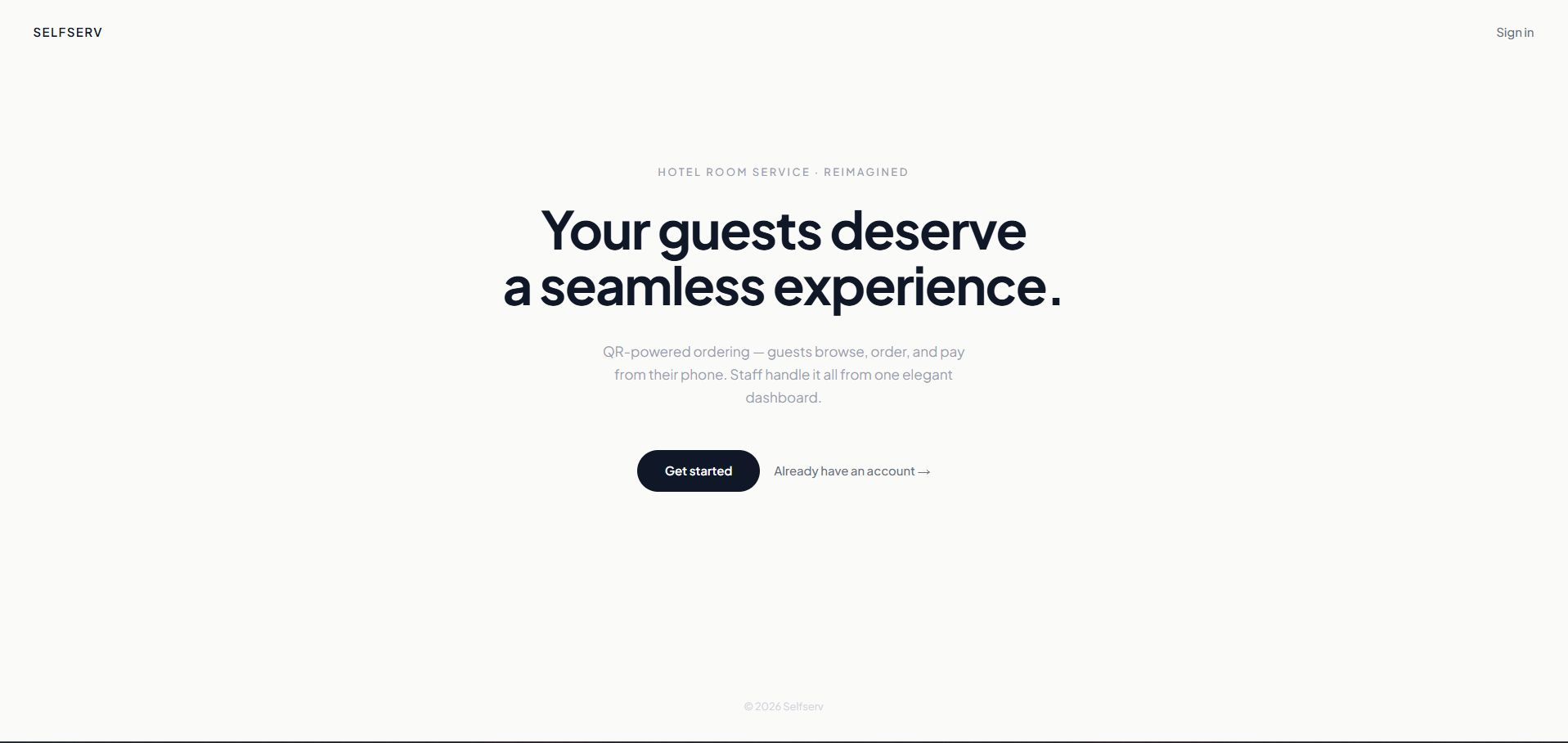
Selfserv is an internal Agara product built by Kresna Putra in 2026. It explores a focused, browser-based room-service journey: guests enter through a QR code, browse an offering, place an order, and move through checkout while hotel staff manage the operational side in one dashboard.
Traditional room-service ordering divides one guest need across a printed menu, a phone conversation, manual order capture, and separate staff coordination. Selfserv explores whether the core interaction can live in a browser without requiring a guest app download.
This case study documents the product build. It does not present Selfserv as a commissioned hotel project or claim deployment, adoption, transaction volume, revenue, conversion, or operational improvement.
Enter the correct hotel context, understand the available offering, select items, review an order, and move through a clear checkout journey from a phone.
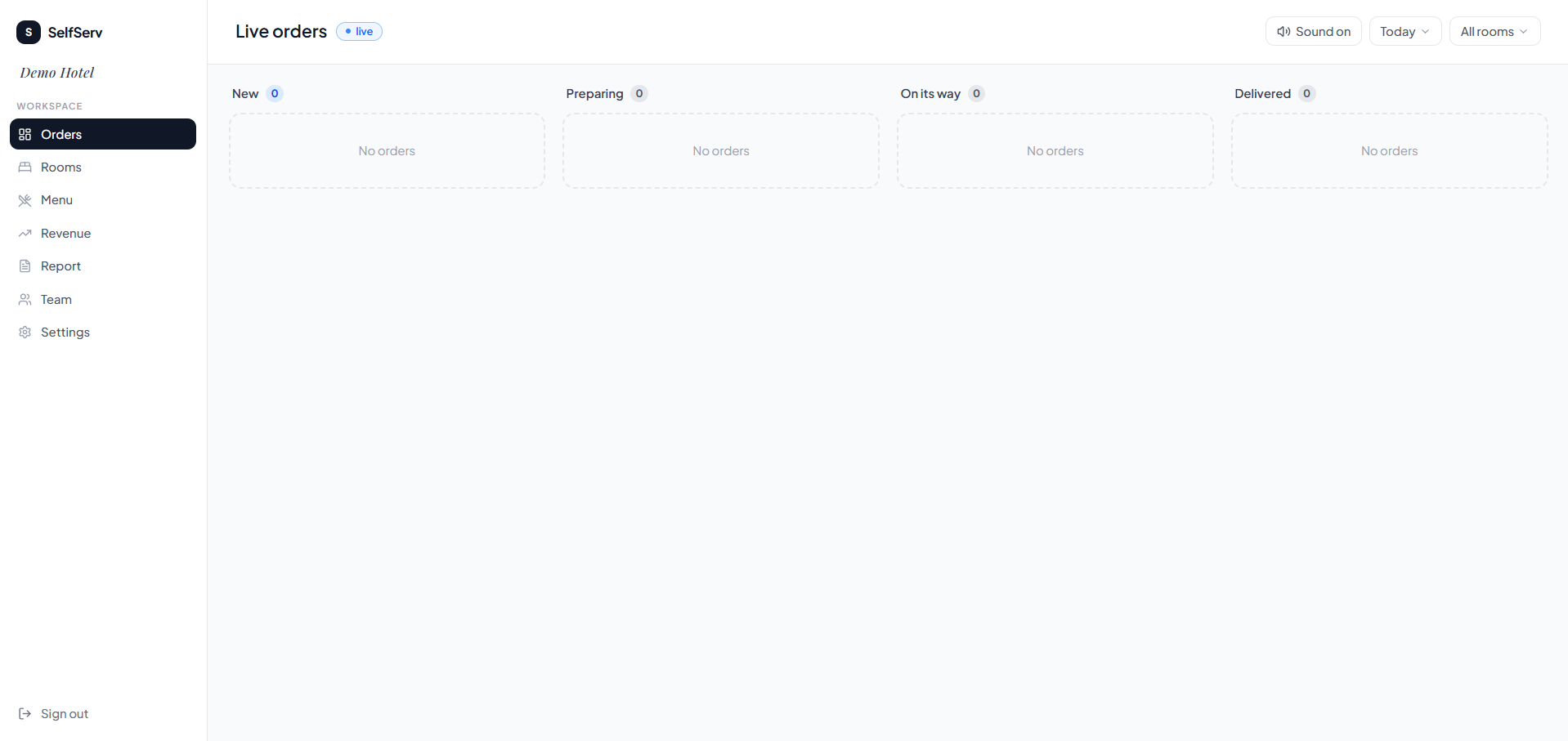
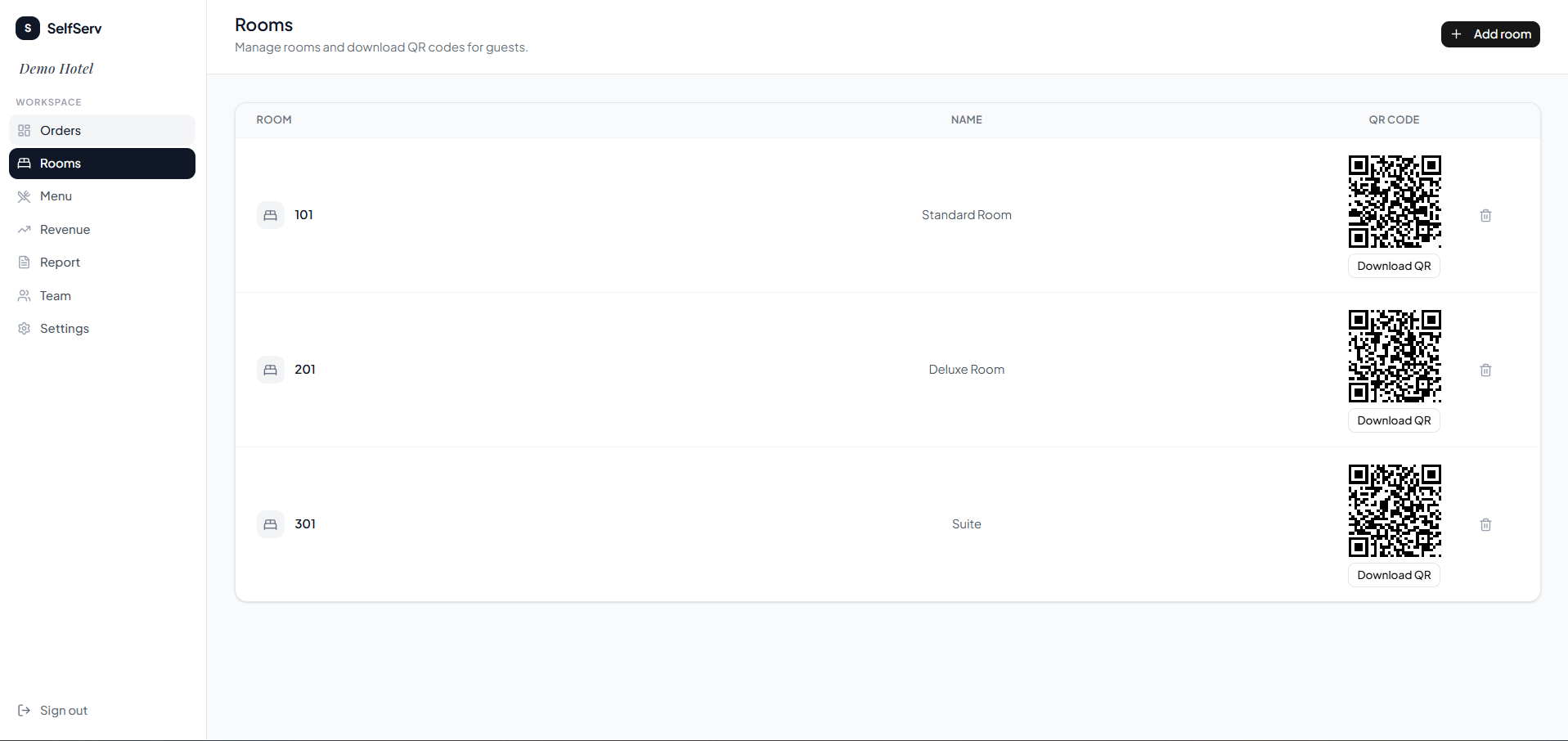
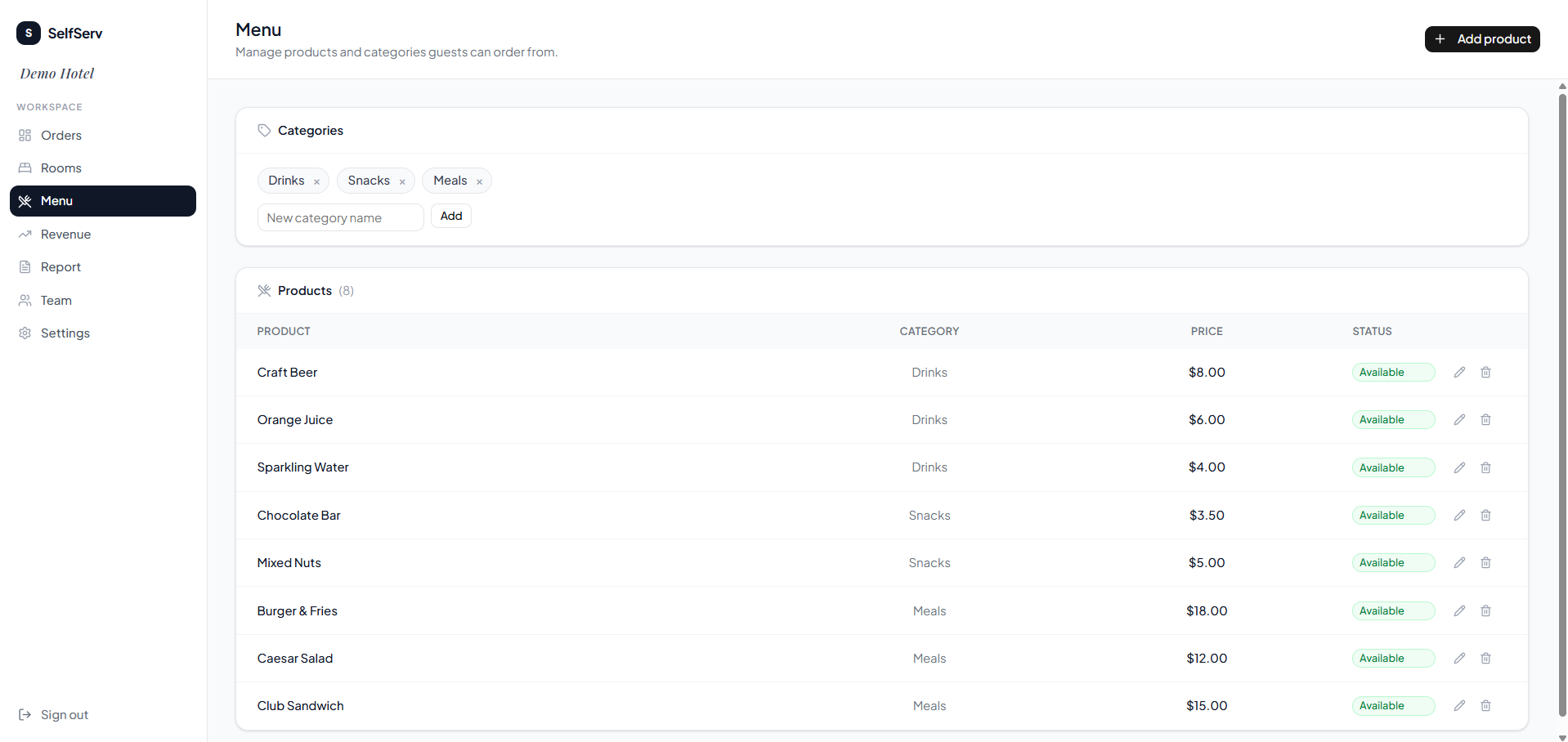
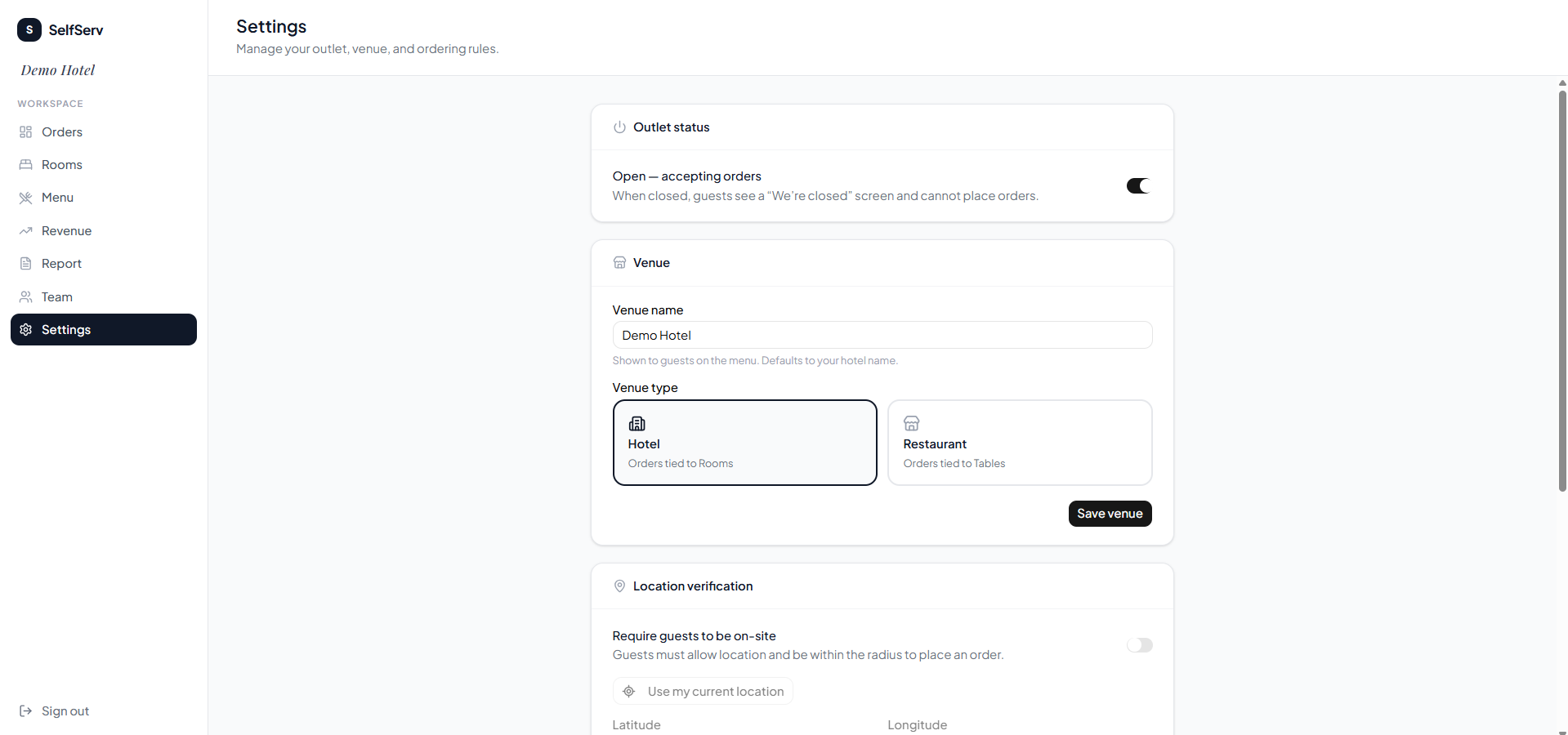
Configure the service, maintain the offering, receive orders, understand their state, and coordinate the work through an operational interface.
The product focuses on one connected service loop rather than trying to become a full hotel-management platform. The useful unit is not an isolated menu screen or dashboard mock-up; it is the complete path between guest demand and staff response.
The product starts from a hotel-specific access point rather than a generic application home screen.
Guests can understand the available room-service offering and move from discovery toward a selection.
The journey maintains enough context for a guest to select, review, and confirm what they want.
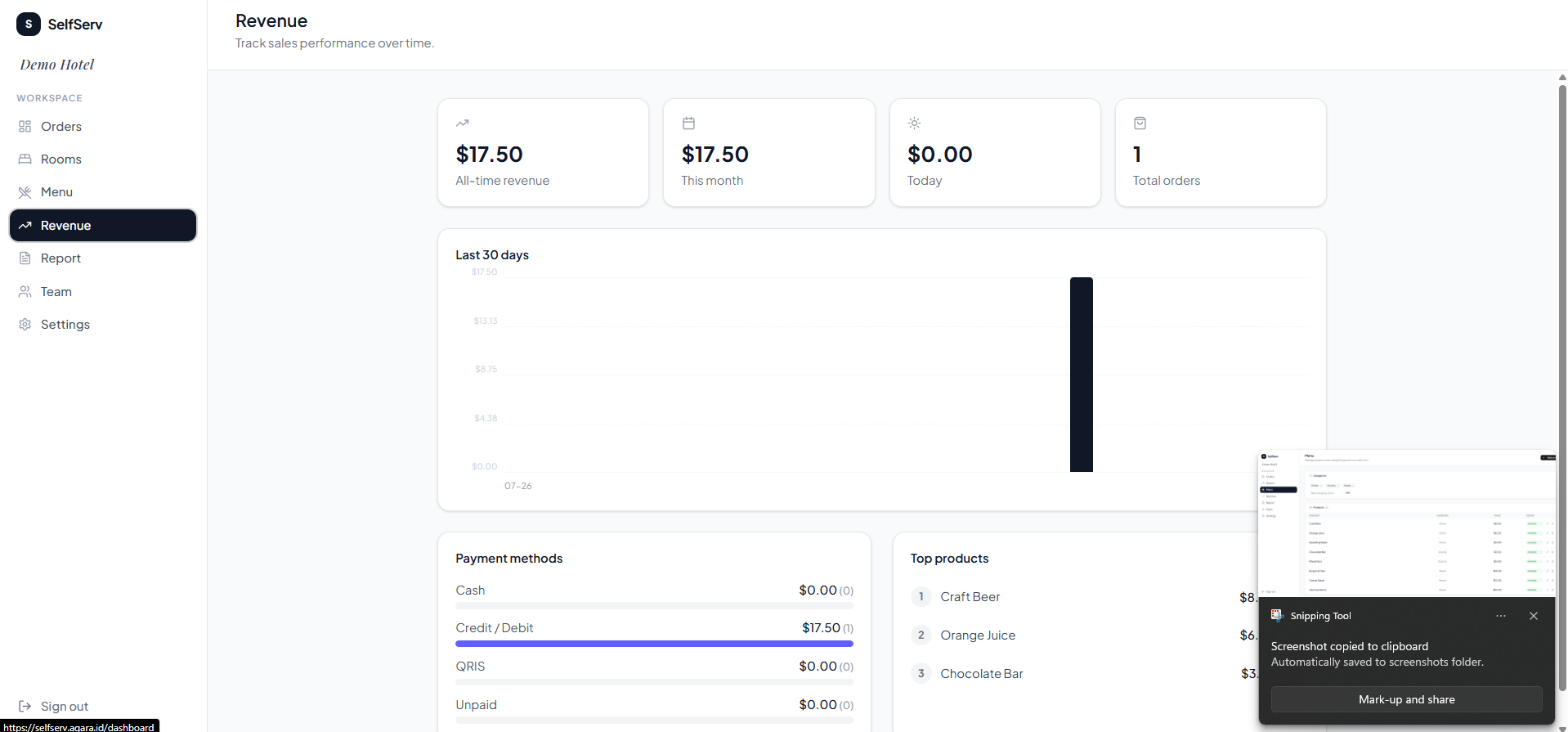
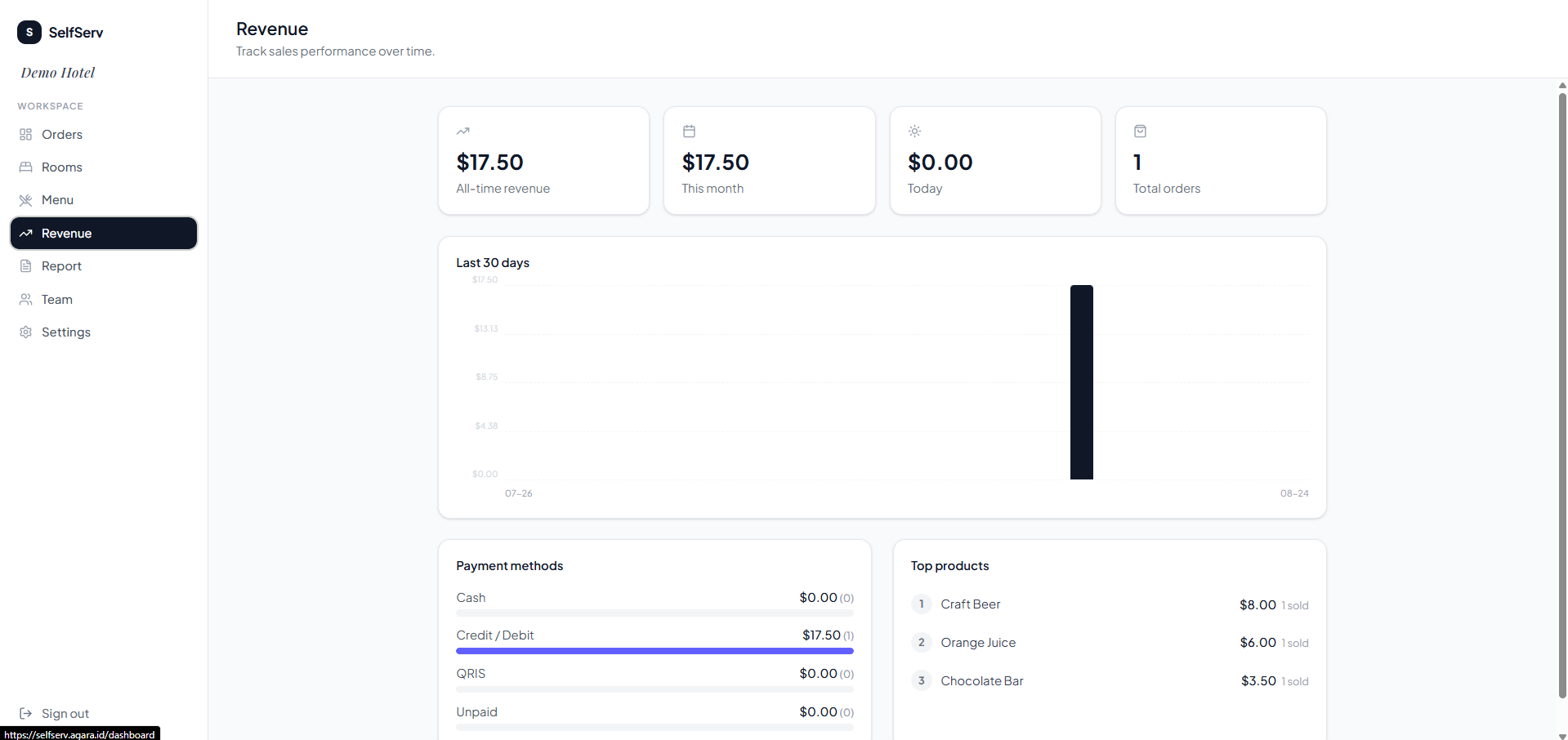
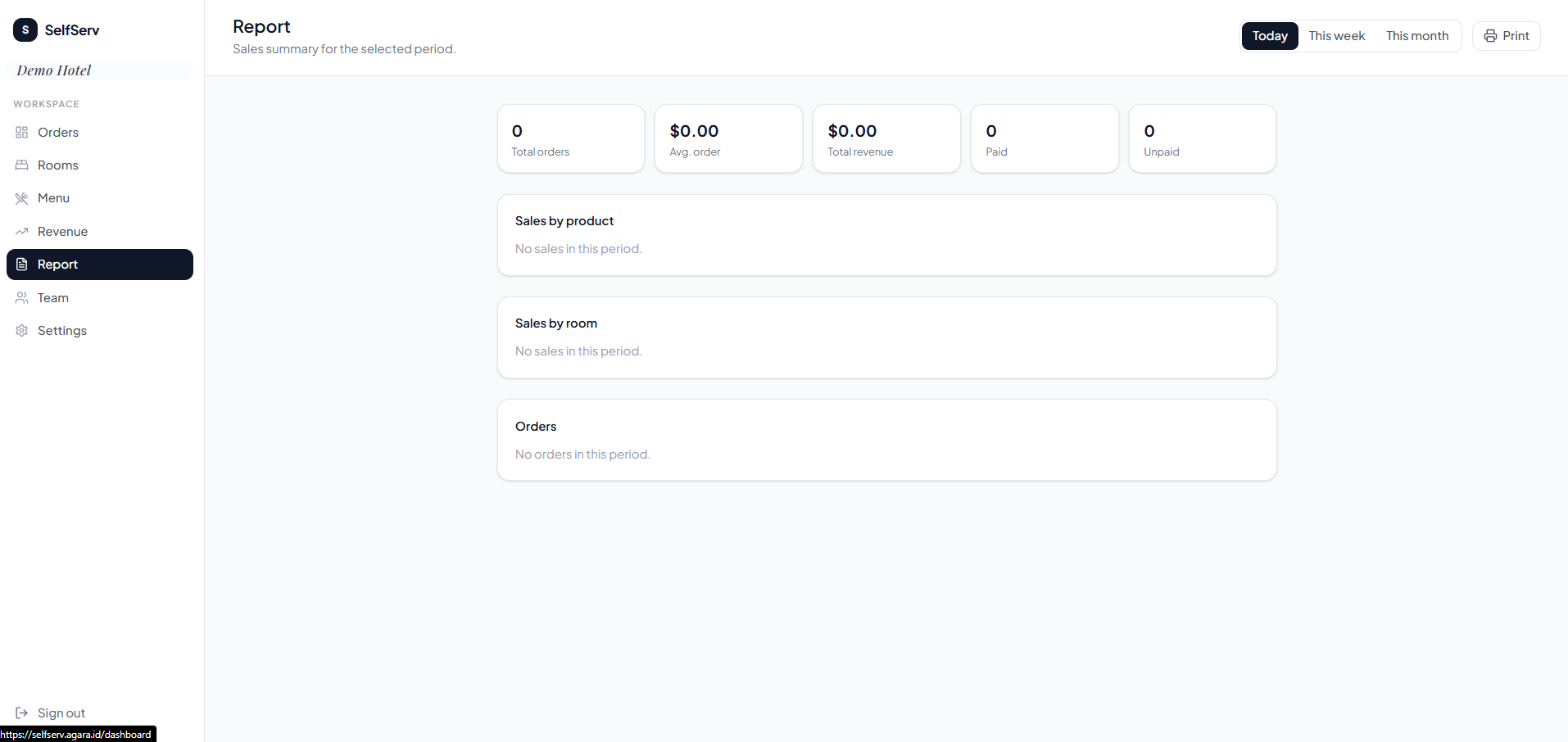
The staff side turns guest demand into an order state that can be reviewed and managed.
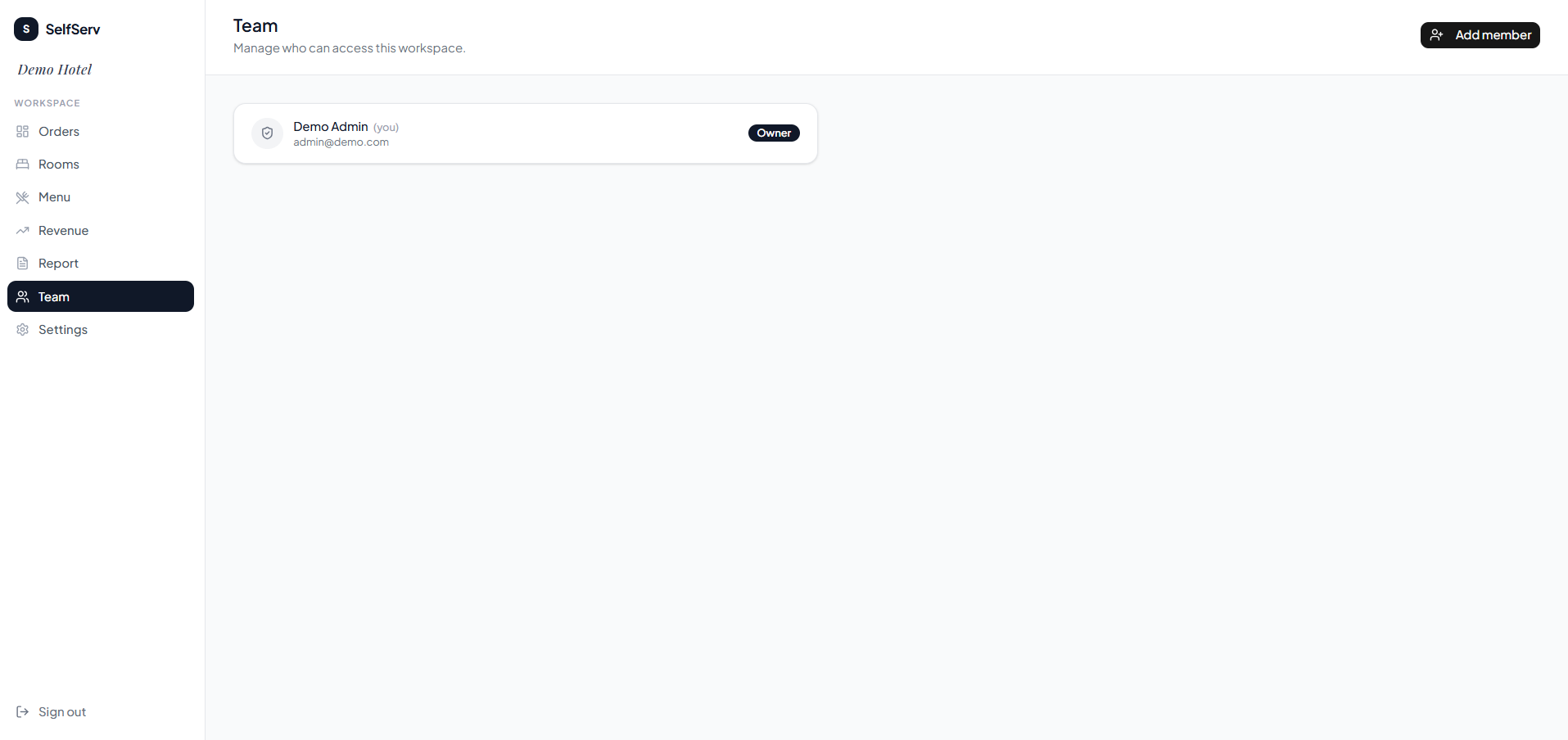
The internal product includes management views rather than leaving all configuration outside the system.
The interface separates guest decisions from operational control while keeping both sides inside the same product concept. That boundary makes the MVP understandable without pretending the first version is a complete hospitality suite.
A guest can enter from a QR code and use the service without installing a native hotel application.
Guest-facing choices remain simple while administration and order management live in dedicated staff views.
The product stays centred on room-service ordering instead of accumulating unrelated hotel features.
Product development by Kresna Putra, Mobile & Fullstack Developer at Agara.
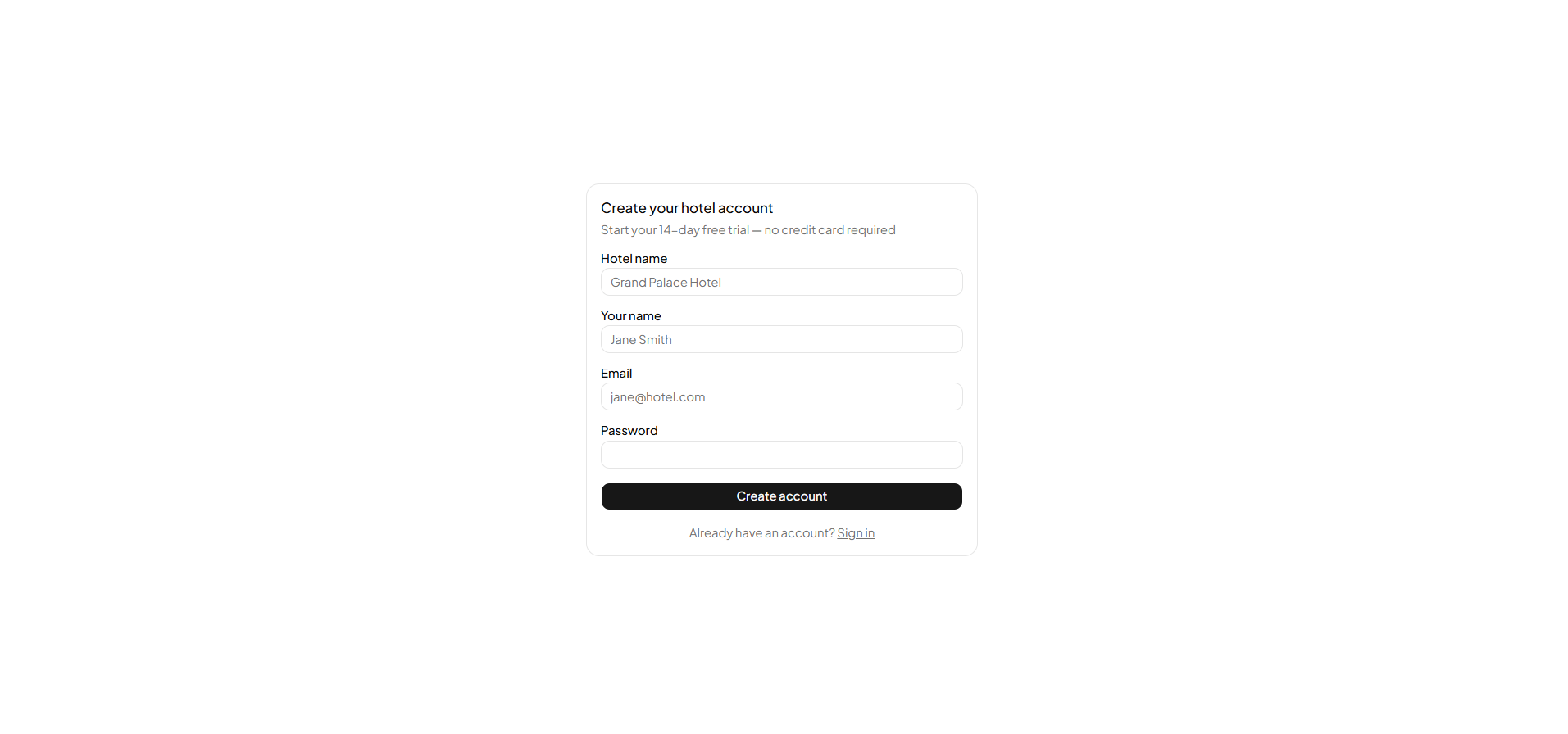
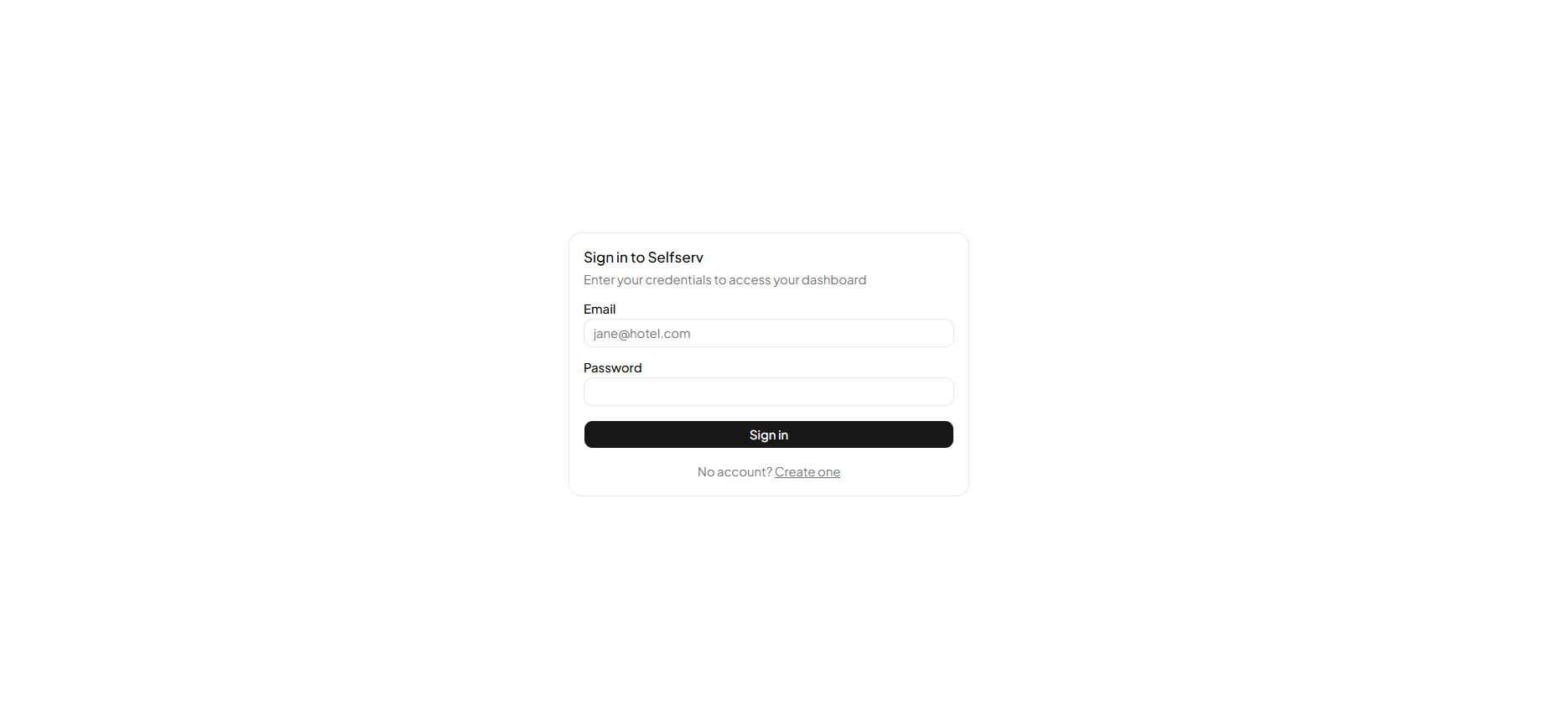
These screenshots are presented as product evidence, not performance evidence. They show the breadth of the implemented interface without implying live hotel adoption or measured commercial results.
A credible MVP case study must distinguish a working build from a validated business outcome. Selfserv demonstrates product execution. The following claims require evidence that is not currently published.
Agara helps define the assumption, constrain the scope, design the experience, and ship the software required to learn from real users. Start with the complete MVP development guide or explore the delivery service.