Agara helps startup founders and business teams turn a defined product assumption into a working minimum viable product. We scope the core journey, design it, engineer it, launch it, and prepare the next decision — without filling version one with features that do not help you learn.
A focused engagement includes
An MVP is not a cheap copy of your final product. It is the smallest coherent release that lets real users complete the core journey and gives your team evidence about what deserves further investment. If you are still defining that journey, use our MVP development guide to move from assumption to measurable decision.
Desirability
Test whether a specific user recognises the problem, completes the core workflow, and returns or takes the next meaningful action.
Usability
Validate that the experience is understandable enough for behaviour and feedback to mean something.
Viability
Define the signal that supports iteration, a pivot, further research, or stopping before more budget is committed.
The best starting point is not a complete specification. It is a clear problem, access to the people who experience it, and willingness to remove features that do not test the main risk.
You understand the customer and commercial problem but need one accountable team to translate it into product decisions and working software.
You need a credible first release that can support user conversations, early adoption, a pilot, or investor due diligence.
You have domain expertise, customers, or an existing manual workflow and want to test a product without funding the full platform first.
You have validated the interface or technical concept and now need production software that users can access, complete, and evaluate.
A focused MVP commonly takes 8–12 weeks when it has one primary journey, a locked feature list, and no unusual compliance or integration requirements. We confirm the schedule only after scoping.
Define the user, problem, riskiest assumption, success signal, and constraints before selecting features.
Map the complete core journey, prioritise only what supports it, and document what version one will deliberately exclude.
Create user flows and production-ready interfaces so usability and edge cases are resolved before expensive implementation.
Deliver working software to a staging environment, review progress in short cycles, and protect the agreed scope.
Complete functional QA, deploy the product, configure agreed analytics or feedback channels, and document the release.
Use observed behaviour and customer feedback to choose what to improve, remove, pivot, or scale next.
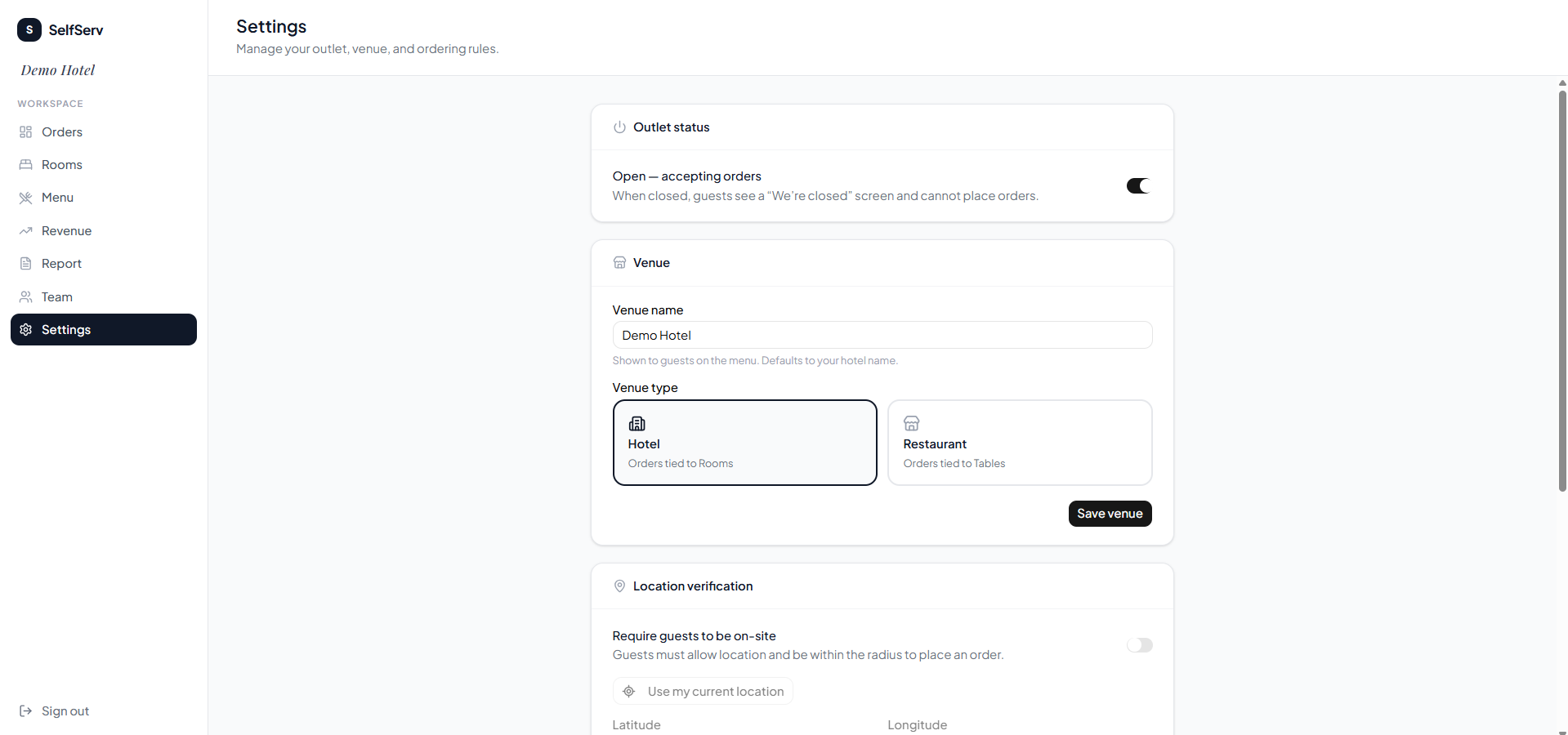
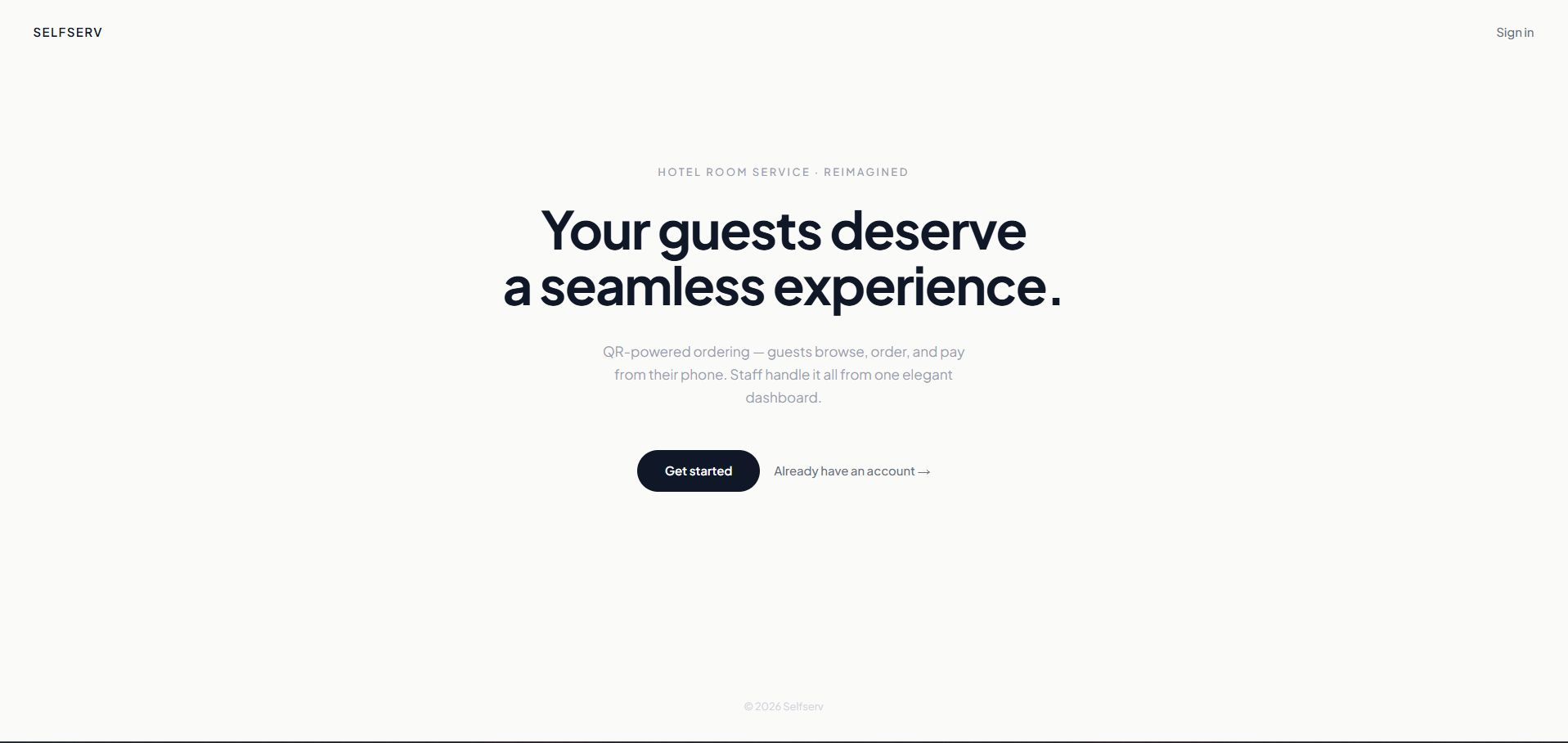
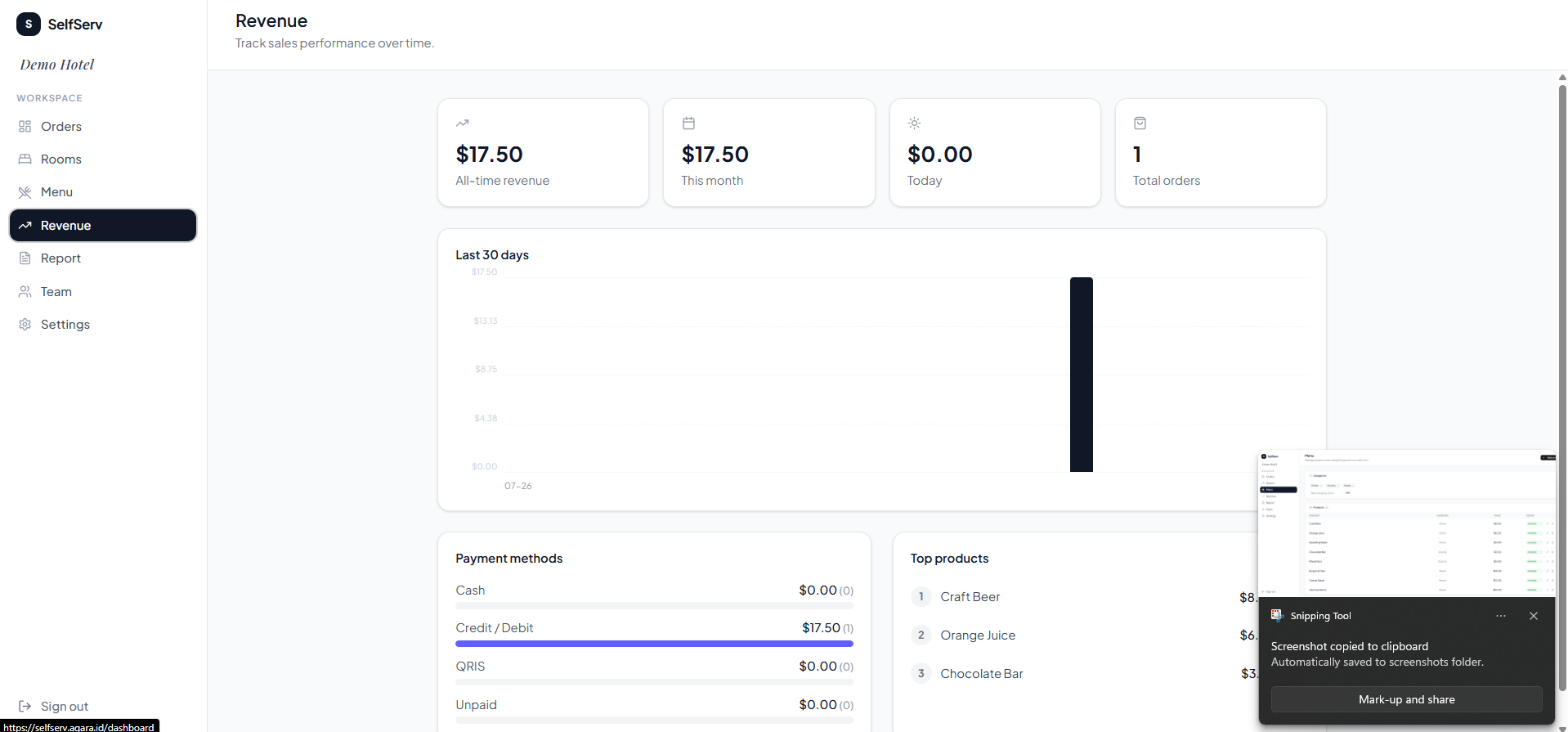
Selfserv is a working hotel room-service product built by Agara. Guests can access the service by QR code, browse an offering, place an order, and pay from a phone. Hotel staff manage the operational side through a dashboard.
We present Selfserv here as proof of a shipped product and connected guest-to-staff workflow. We do not publish adoption, revenue, conversion, or hotel performance claims without verified data.
Visit the live Selfserv product → Read the Selfserv MVP case study →
The exact deliverables follow the assumption and scope. A typical engagement covers the product work required to move from an idea or prototype to a testable production release.
Assumption, target user, core journey, feature boundary, exclusions, risks, and acceptance criteria.
User flows, responsive interface designs, interaction states, and a reusable component foundation.
The agreed web or mobile release, backend services, database, authentication, and integrations.
Functional testing, edge-case review, responsive checks, and release readiness against acceptance criteria.
Deployment, environment configuration, agreed analytics or feedback capture, and monitoring setup.
Source code, design files, technical documentation, credentials transfer, and an agreed post-launch plan.
MVP development is the process of defining, designing, building, and launching the smallest coherent software product that can test a specific business assumption with real users. It is more than a clickable prototype: a functional MVP supports a complete core journey and produces evidence for the next product decision.
A focused Agara MVP commonly takes 8–12 weeks when it has one primary user journey, a defined feature list, and no unusual compliance or integration requirements. We confirm the estimate after scoping. Multi-sided marketplaces, regulated products, and integration-heavy platforms require a separate timeline.
The service includes product scoping, feature prioritisation, user flows, UI/UX design, engineering, quality assurance, production deployment, documentation, and handover. Analytics and post-launch iteration are scoped according to what the MVP needs to learn after release.
Yes. After the agreed project obligations are complete, you receive the project source code, design files, documentation, and agreed account handover. Ownership details and third-party licence limitations are documented in the project agreement before development starts.
Yes. Agara can support monitoring, bug fixes, feedback analysis, feature iterations, and the transition from MVP to a broader product. The roadmap is based on observed usage and business priorities rather than an automatically expanded feature list.
MVP cost depends on the number of user roles, core workflows, integrations, platform choice, security requirements, and launch obligations. Agara defines the feature boundary first and then provides a scoped estimate, so the quote describes a testable release rather than an arbitrary feature allowance.
Tell us the user, problem, and assumption behind your idea. We will give you an honest view of what belongs in the MVP, what can wait, and what needs validation before development.